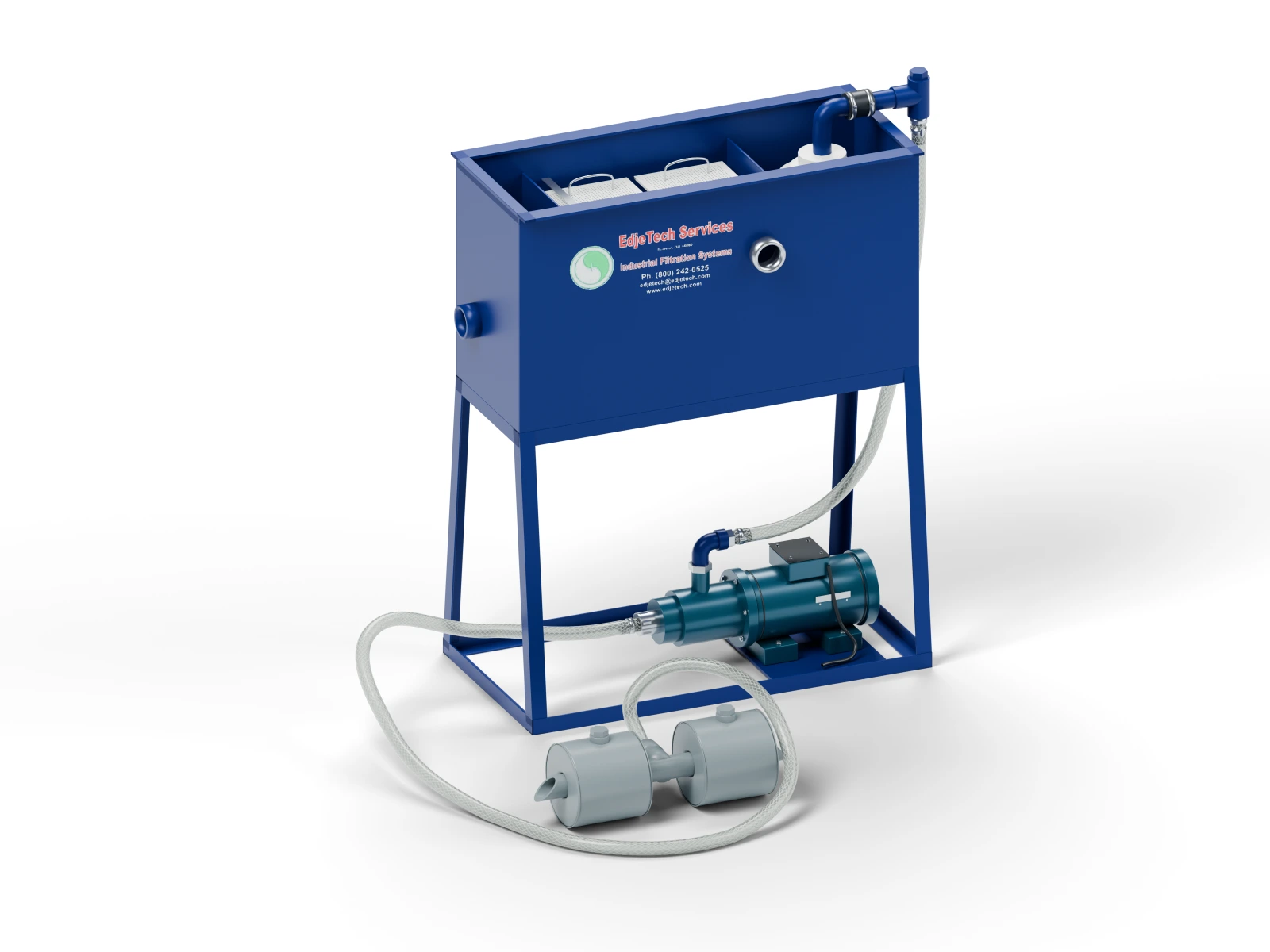
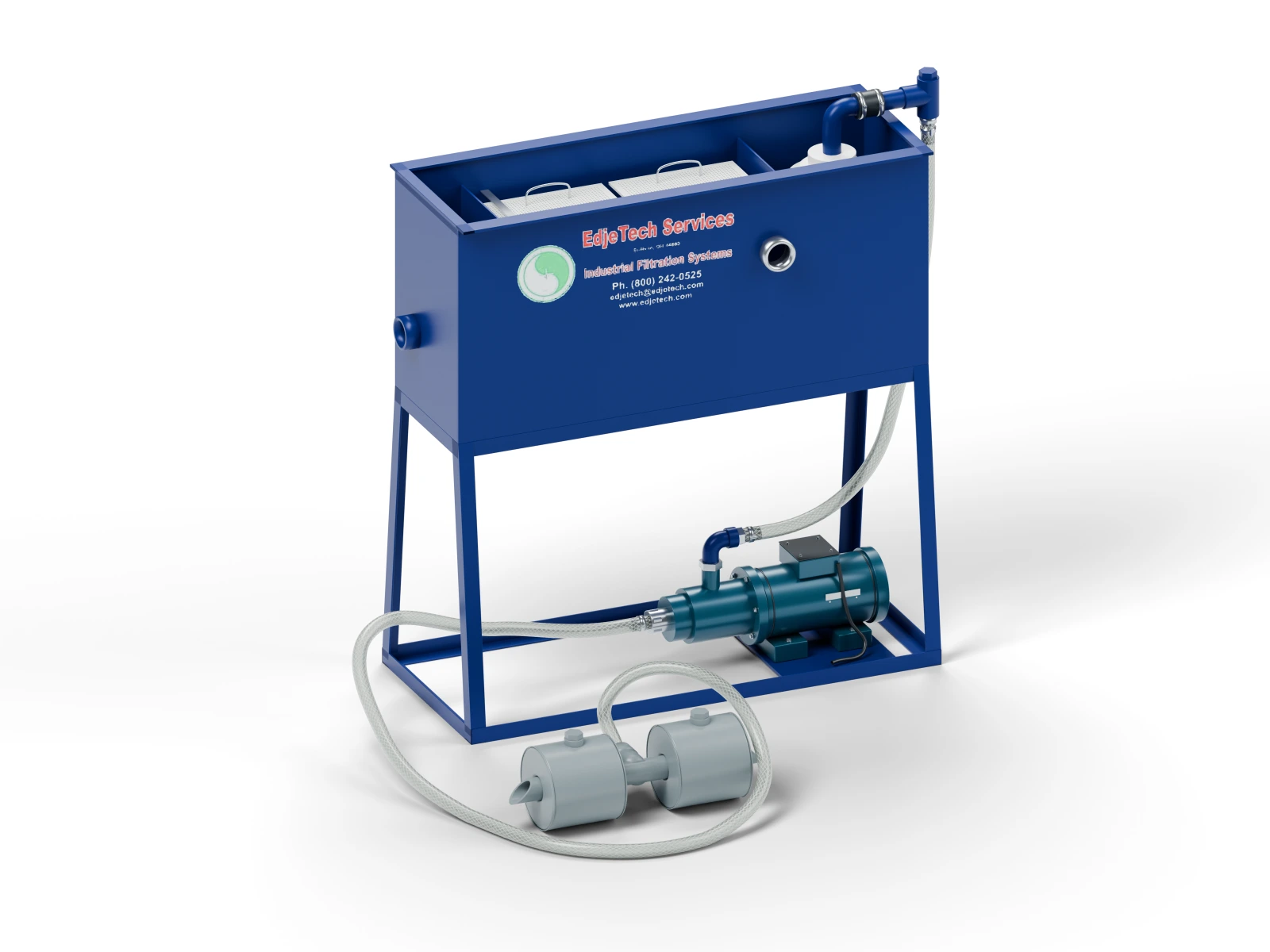
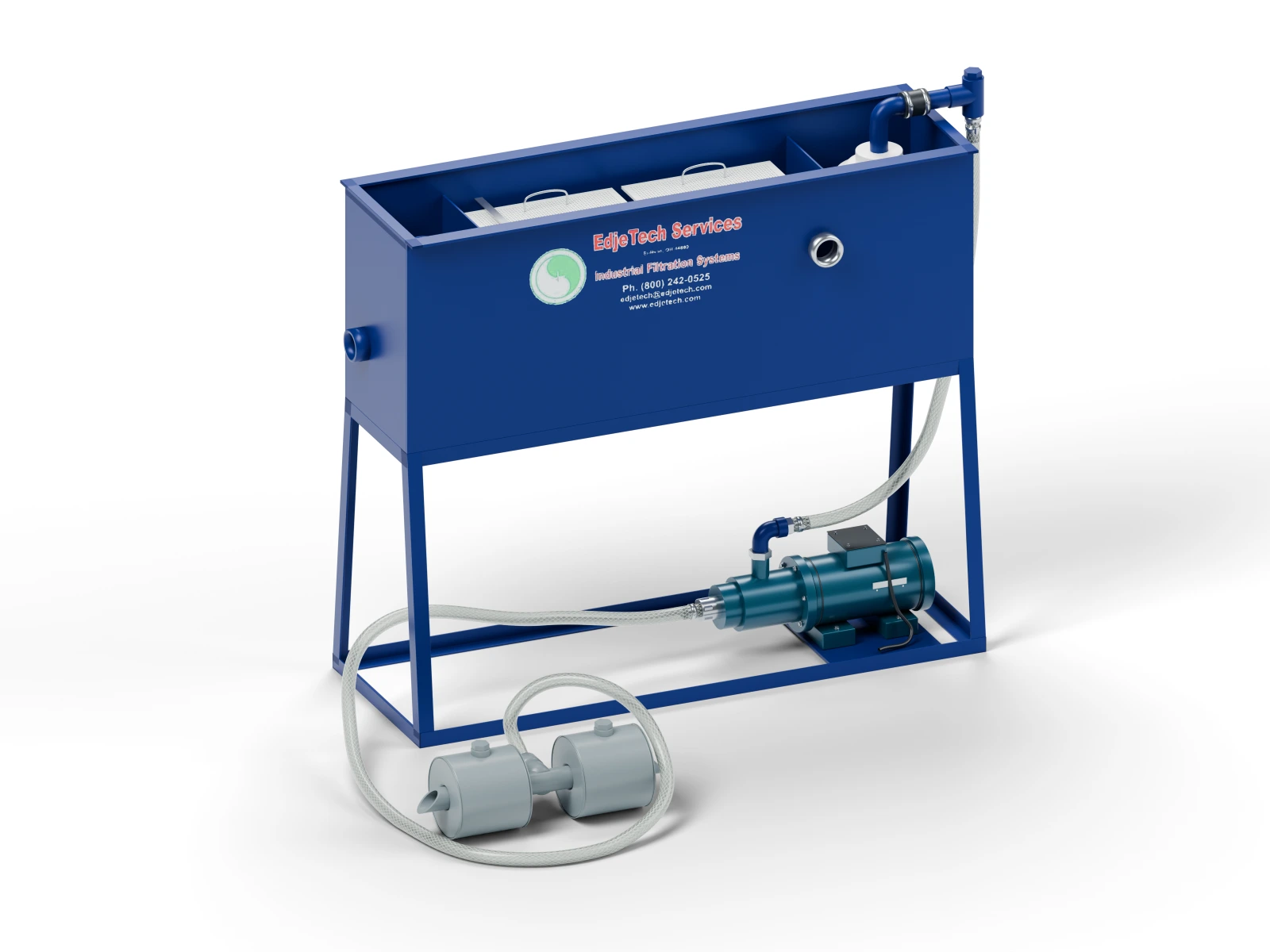
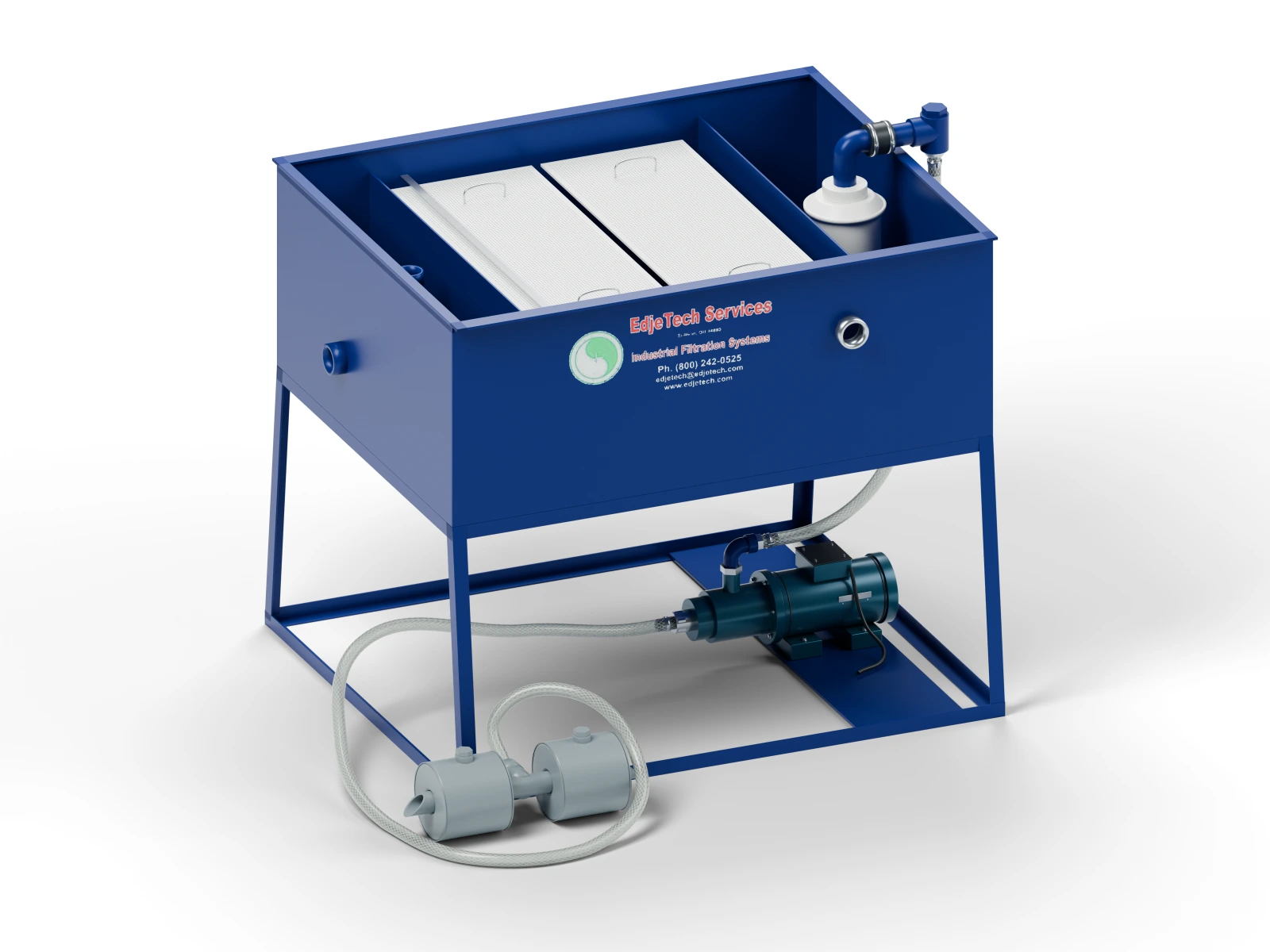
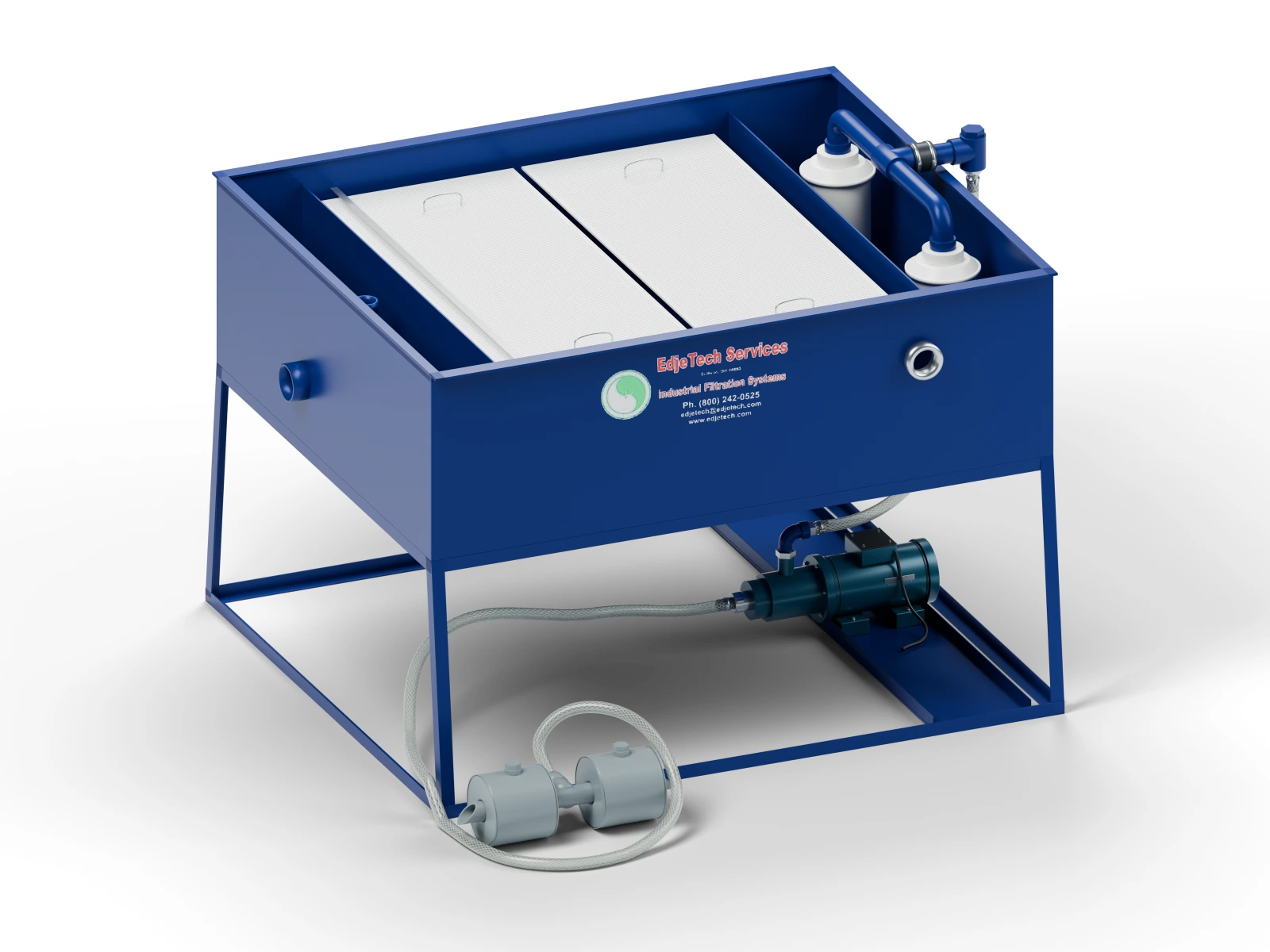
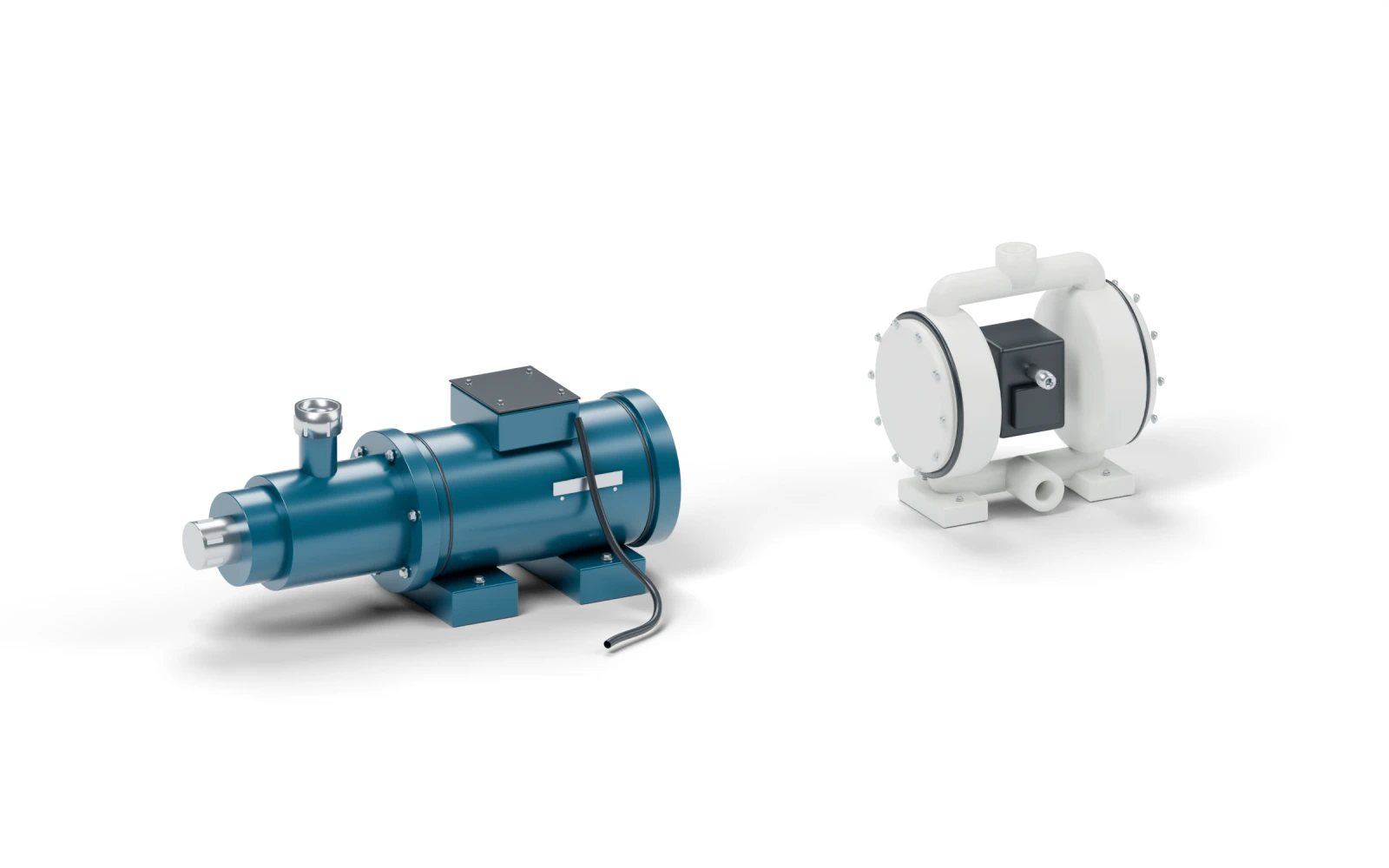
Air-operated or electric pump
Air diaphragm or electric progressive-cavity pump, selected for the order.

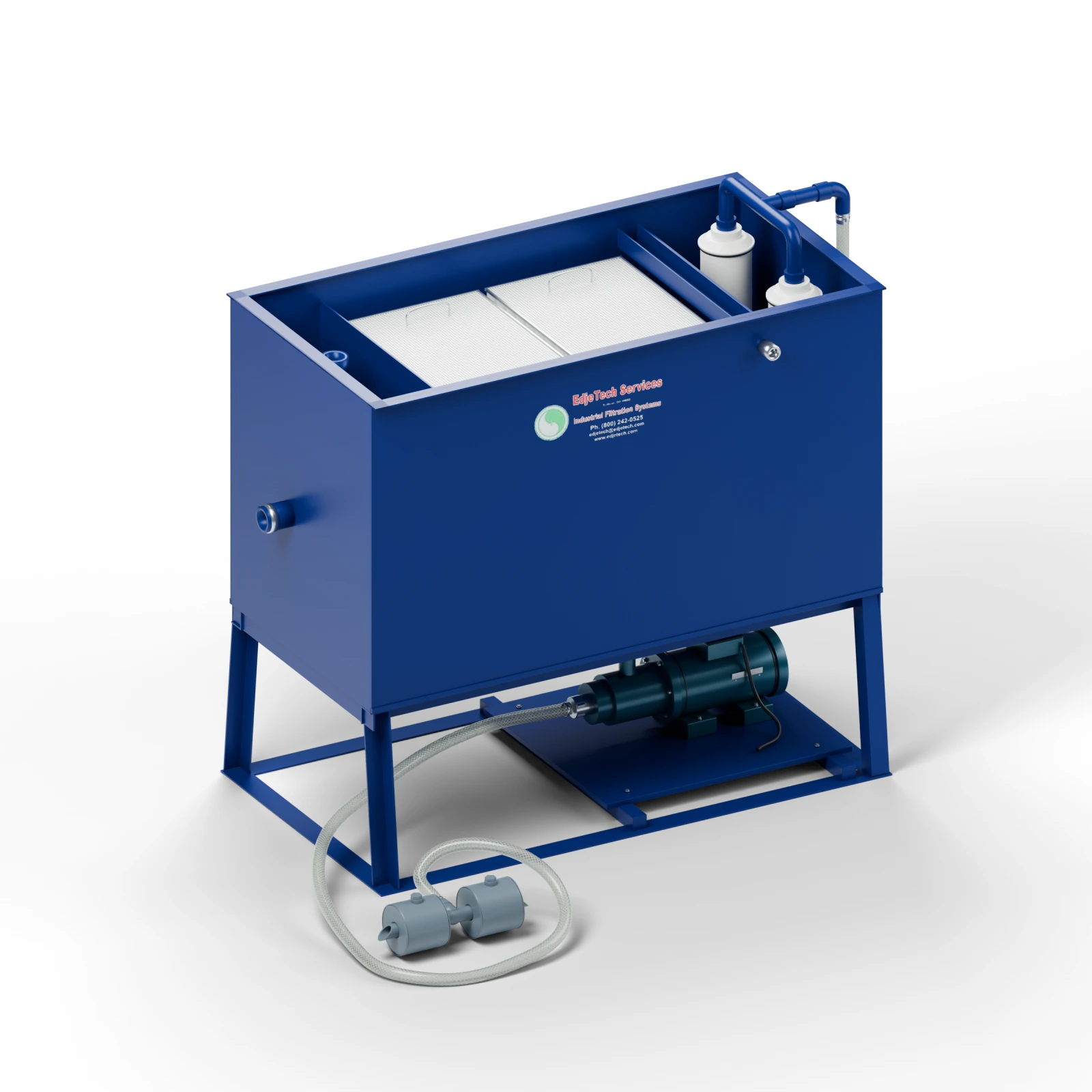
Remove free-floating, dispersed, and loosely emulsified tramp oil from metalworking coolant with T.O.S.S. Designed for machine sumps, parts washers, large reservoirs, and coolant pits, the separator operates automatically and returns clarified fluid by gravity without interrupting the machine.
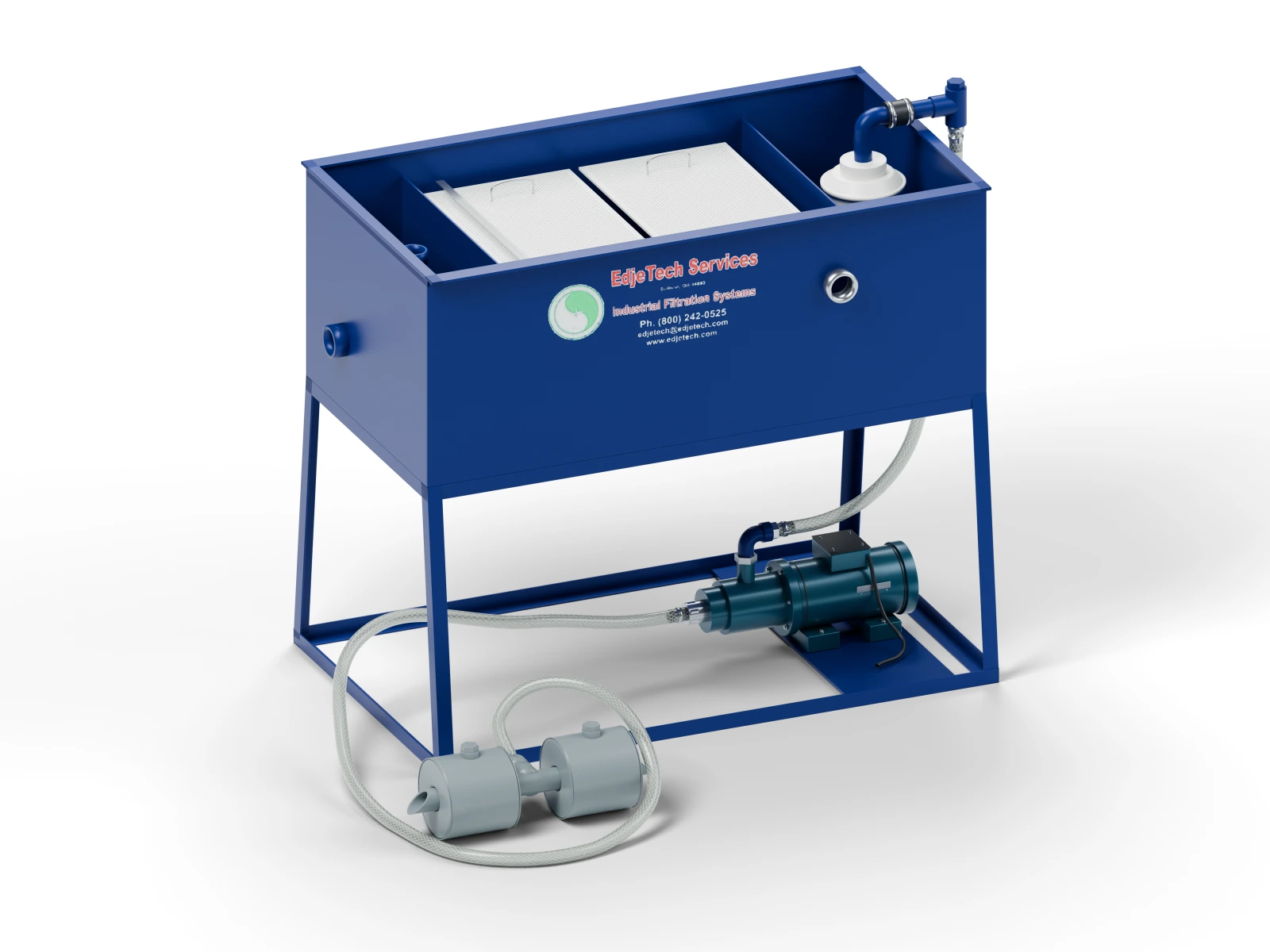
| Model | Dimensions (L × W × H) | Flow GPM | Flow GPH | Operating cap. | Clean discharge | Tramp oil discharge | Tank construction |
|---|---|---|---|---|---|---|---|
| 2 | 120 | 25 gal | 1-1/2" NPT | 1-1/2" | Carbon steel | |
| 3 | 180 | 30 gal | 1-1/2" NPT | 1-1/2" | Carbon steel | |
| 5 | 300 | 37 gal | 1-1/2" NPT | 1-1/2" | Carbon steel | |
| 10 | 600 | 75 gal | 2" NPT | 1-1/2" | Carbon steel | |
| 15 | 900 | 110 gal | 2" NPT | 1-1/2" | Carbon steel | |
| 25 | 1,500 | 290 gal | 3" NPT | 2" NPT | Carbon steel | |
| 50 | 3,000 | 400 gal | at quote | at quote | Carbon steel | |
| On request | 150 | 9,000 | Configured to order | At quote | At quote | Specified with order |
Compare all tramp oil separators
L = length · W = base width · H = tank/stand height.
Options include a pre-filter assembly, V-bottom, casters, extra leg length, electric pump, vertical or ballast skimmer, an ozone generator, and stainless steel construction upon request. Ozone replaces routine biocide dosing with automated bacteria control and odor neutralization. Routine ownership care centers on condition-based filter service and planned cleaning of the accessible separator components.
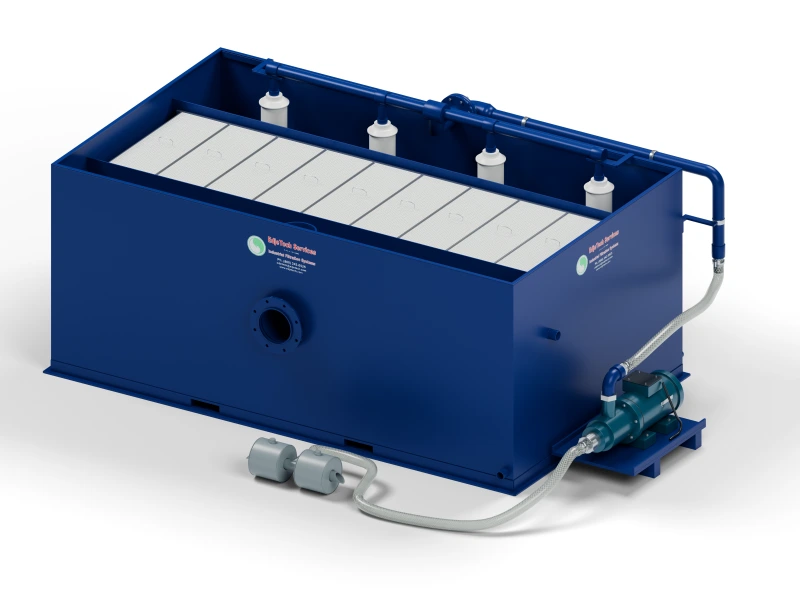
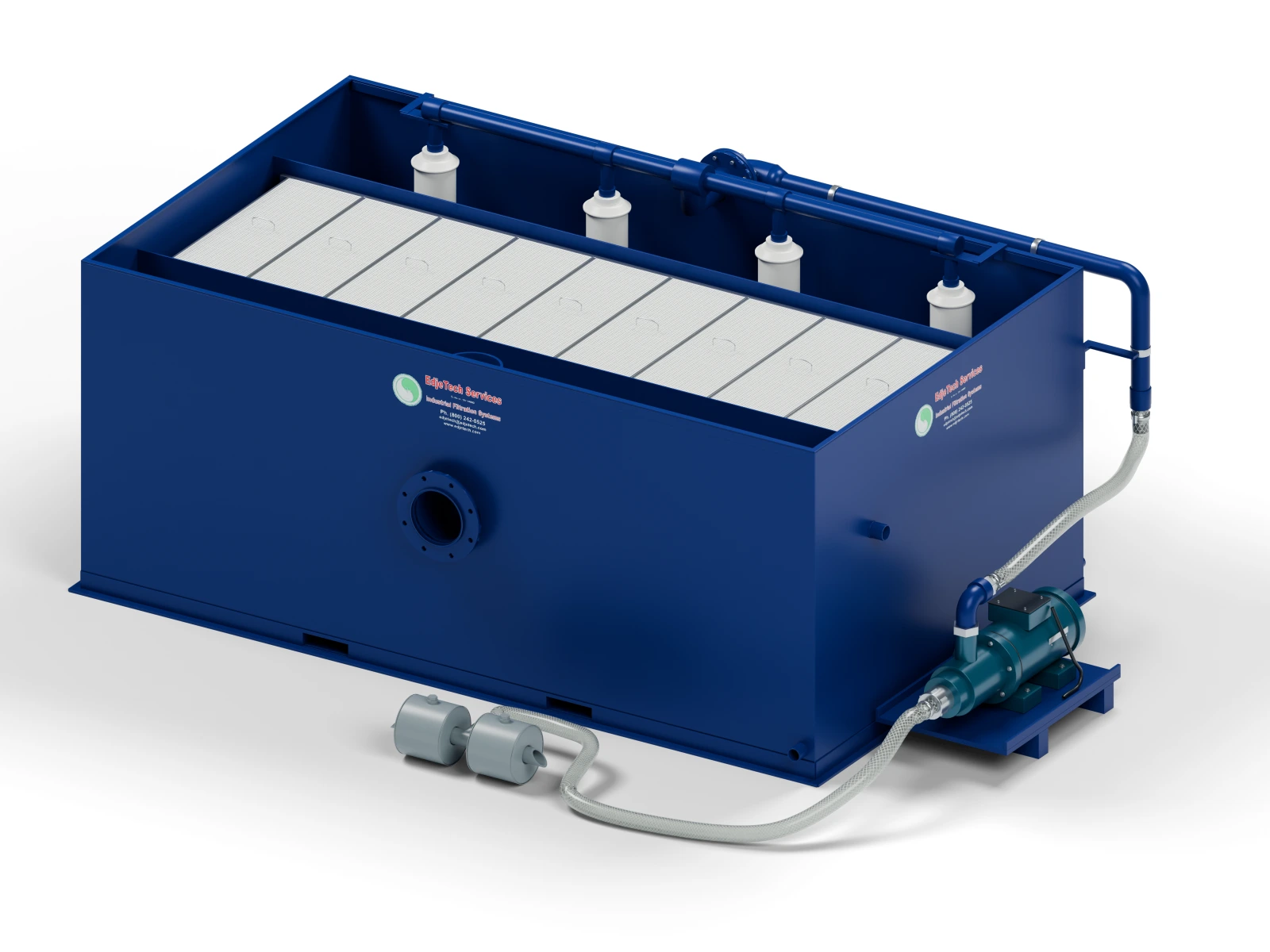
Keep coolant in service in larger reservoirs and coolant pits with a dedicated T.O.S.S. 150 separator. Pump and skimmer selection are matched to your application.
Request a quote →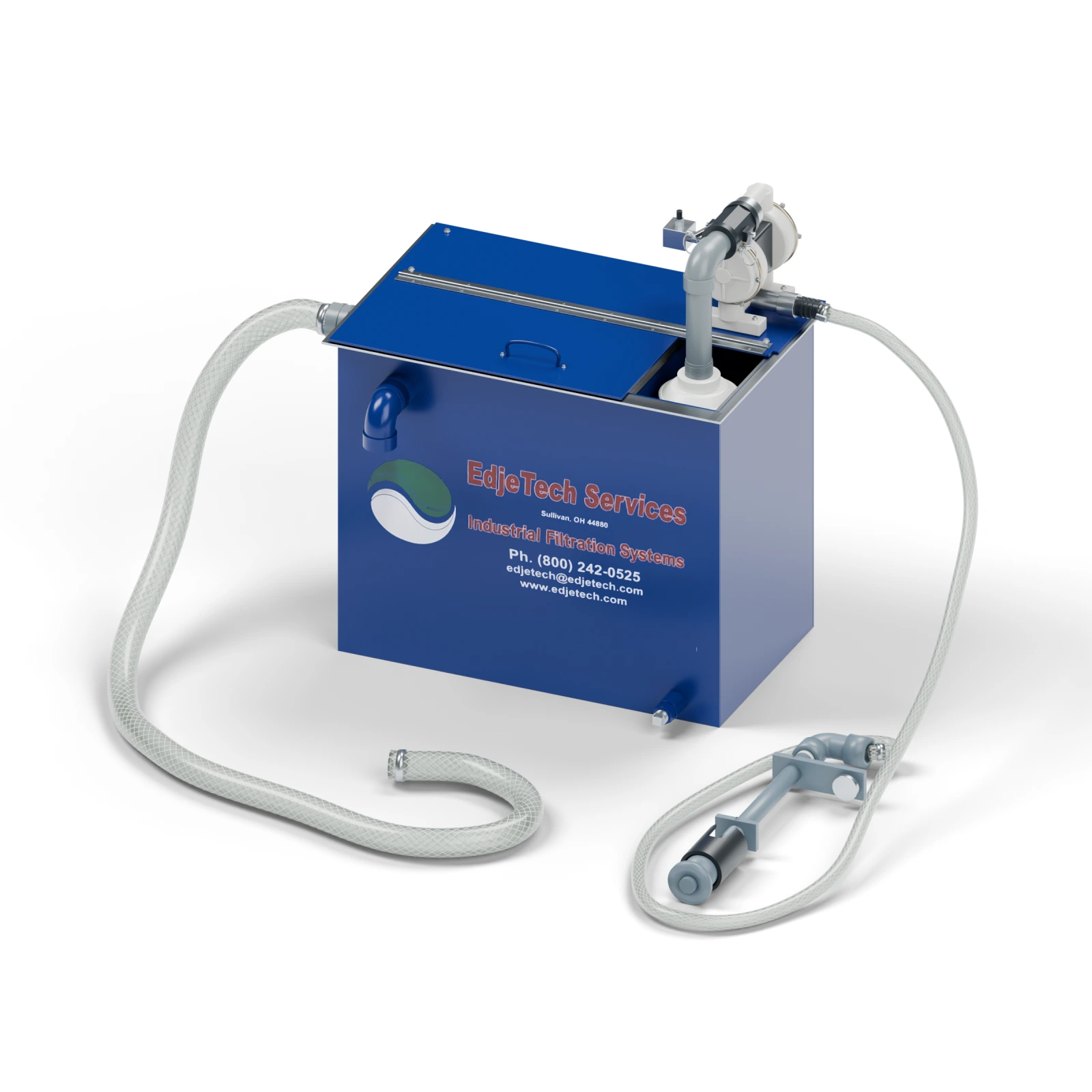
To treat one reservoir at a time and move between locations, the T.O.S.S. T1 provides the same coalescing separation in a portable, skid-mounted configuration available in six builds.
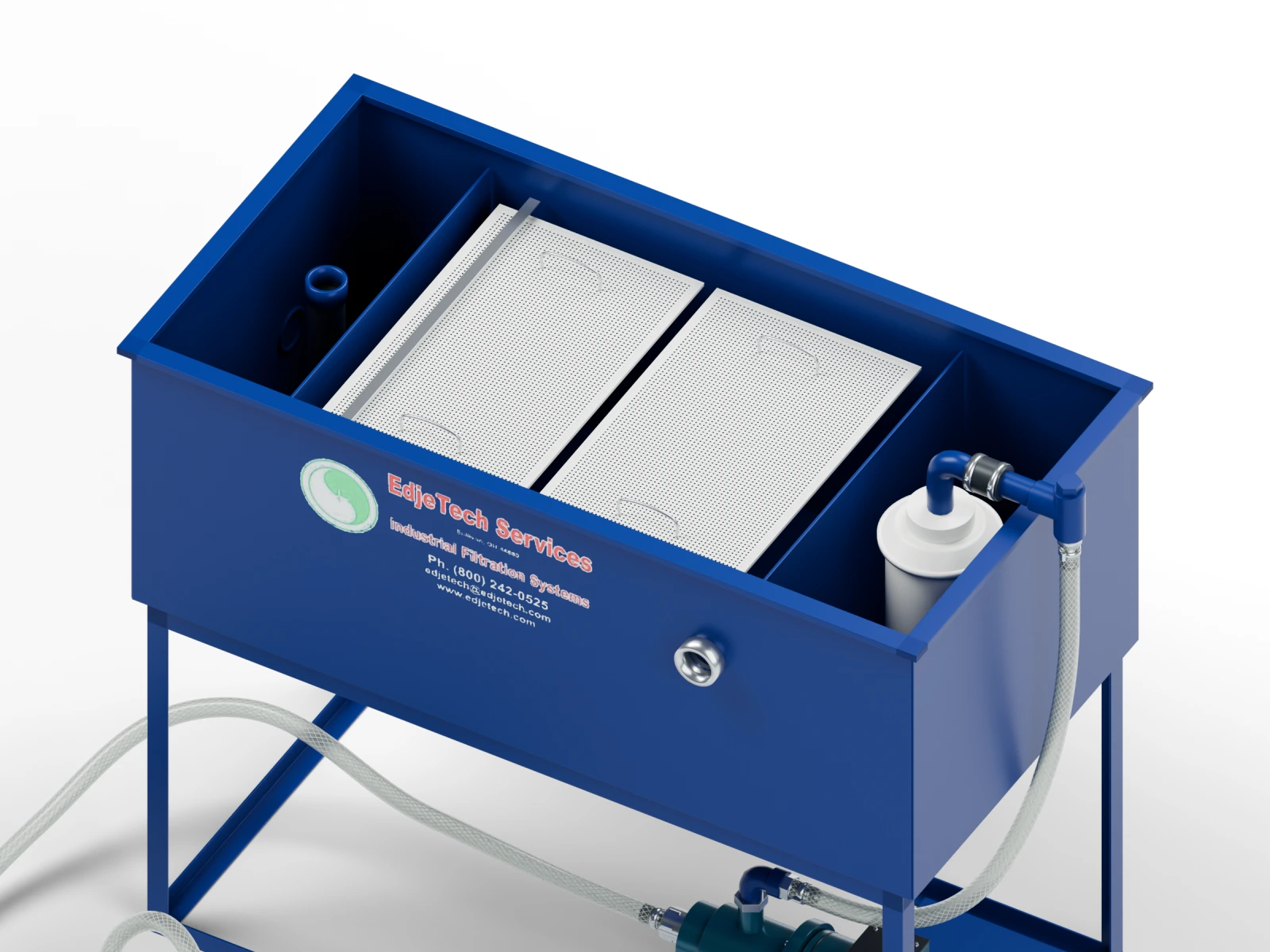
Explore the portable T.O.S.S. T1 separator →T.O.S.S. combines bag filtration and polypropylene coalescing media in one compact unit. The floating skimmer draws oil-rich fluid from the reservoir surface and below it. Filtration captures suspended solids, while the coalescing media brings mechanically dispersed and loosely emulsified oil droplets together so they rise and separate along with free-floating oil. Clarified coolant returns by gravity.
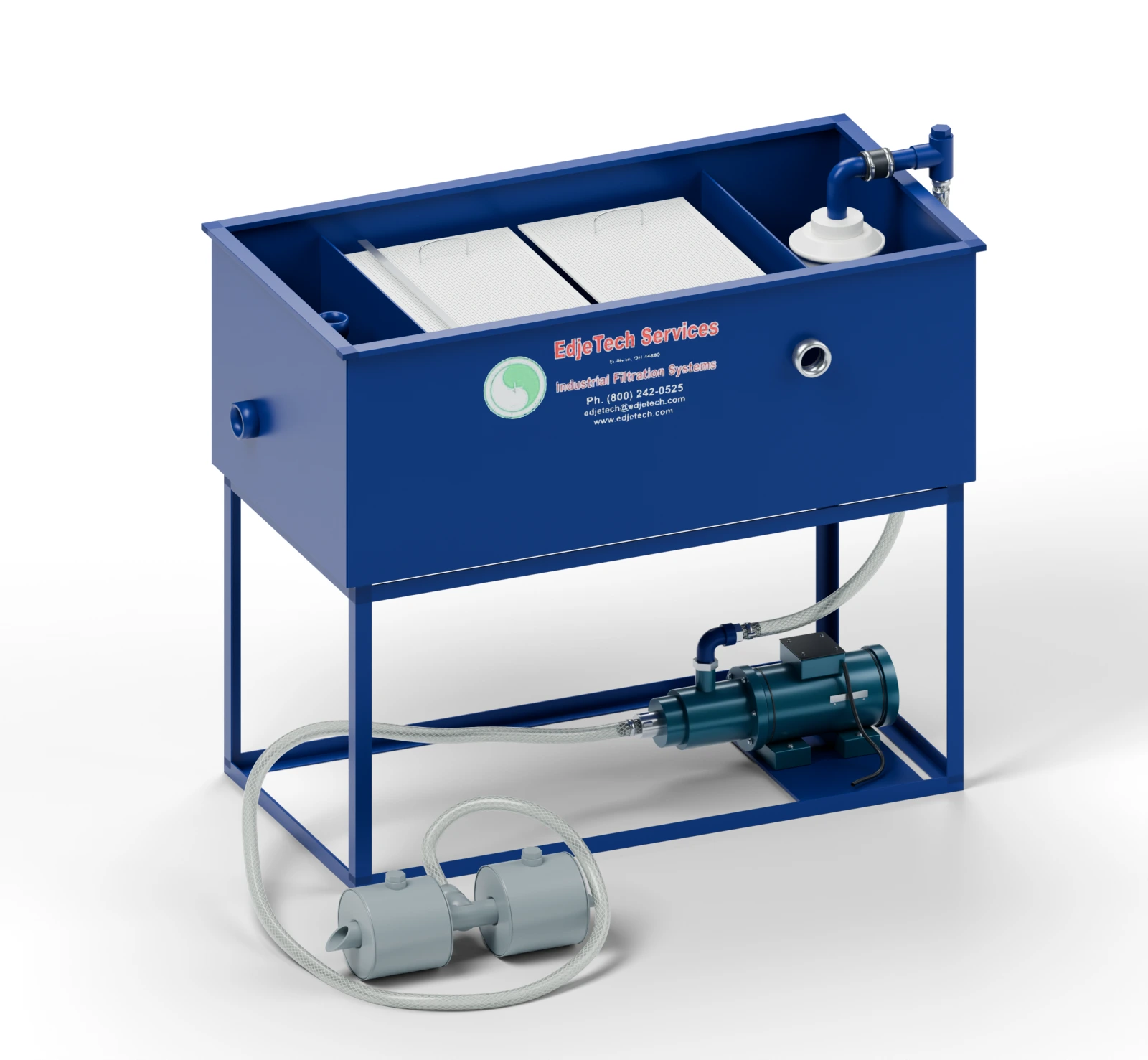
Directs incoming fluid through the bag filter to remove suspended solids before coalescing.
Combines small oil droplets so they rise to the surface for removal.
Draws fluid through the floating skimmer and feeds the bag-filter section.
Collects fluid and floating oil from the reservoir surface as the fluid level changes.
Houses the filtration and coalescing sections and supports the separator assembly.
Electric supply pump and ballast floating skimmer. Configuration varies by model and application.
The skimmer removes the oily surface layer, the bag filter captures solids, and the coalescing media separates tramp oil before clarified coolant returns by gravity.
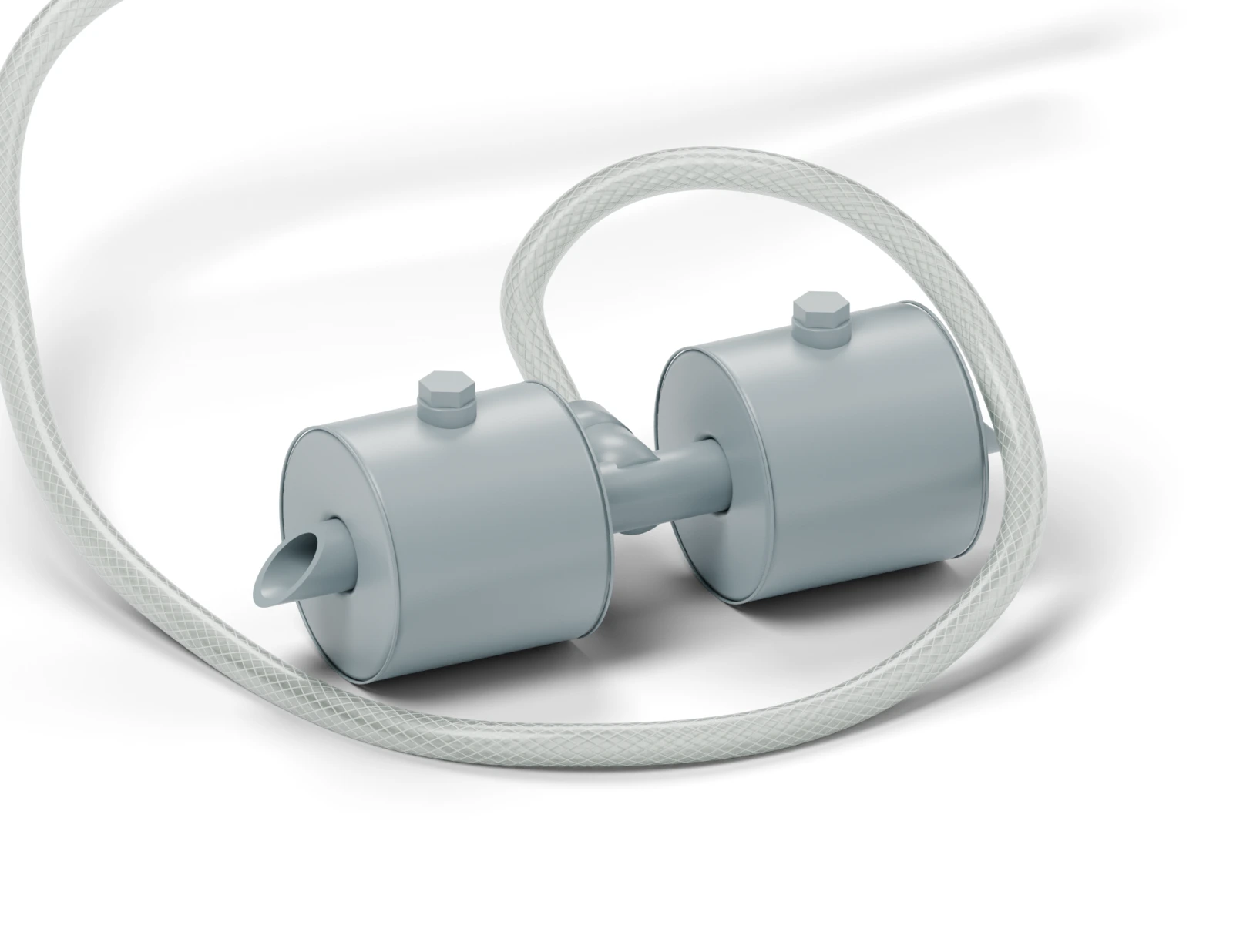
The floating skimmer follows the fluid level and draws oil-rich fluid from the surface and below it.
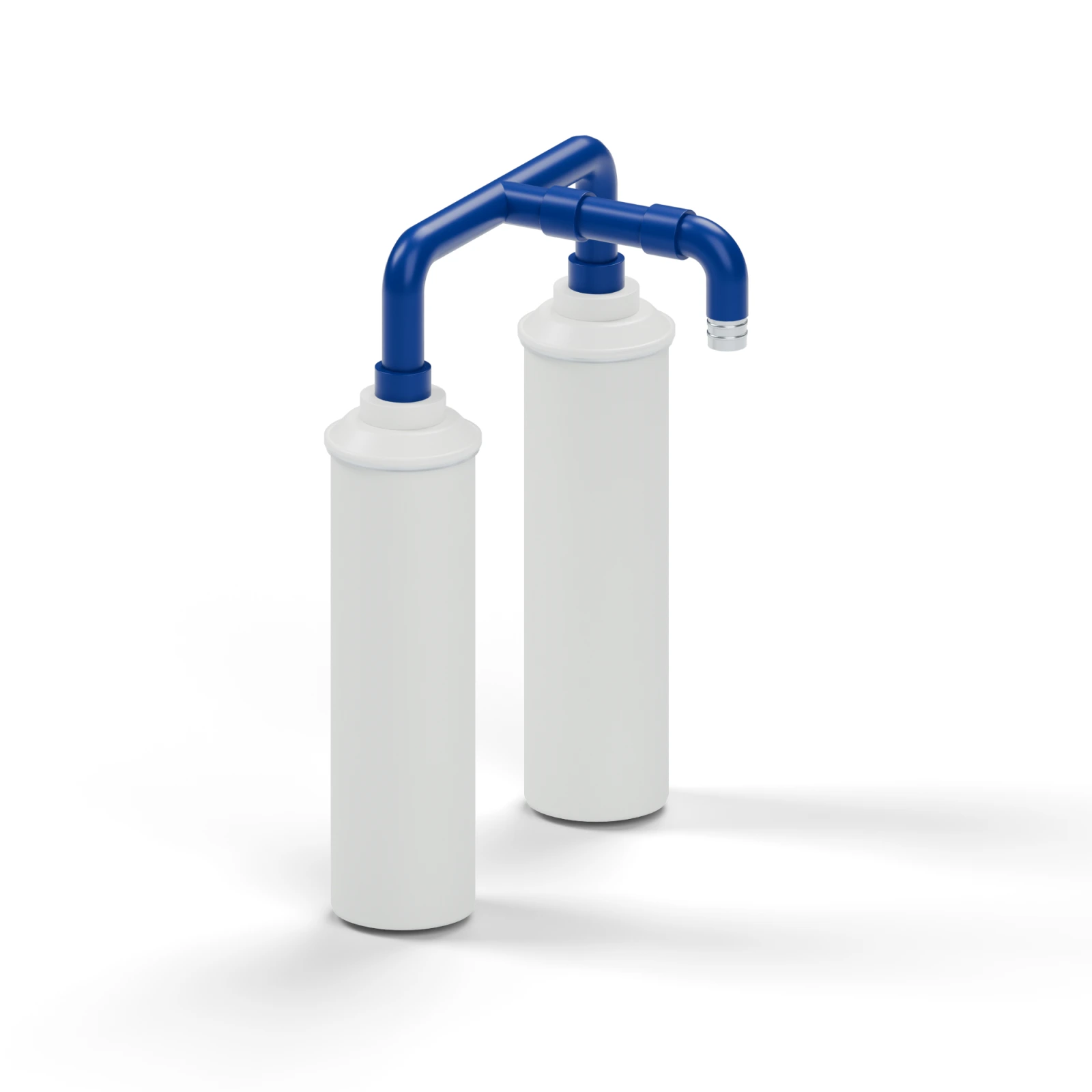
The supply pump sends the collected fluid through a bag filter (100µ supplied, 1 to 200µ available) to remove suspended solids.
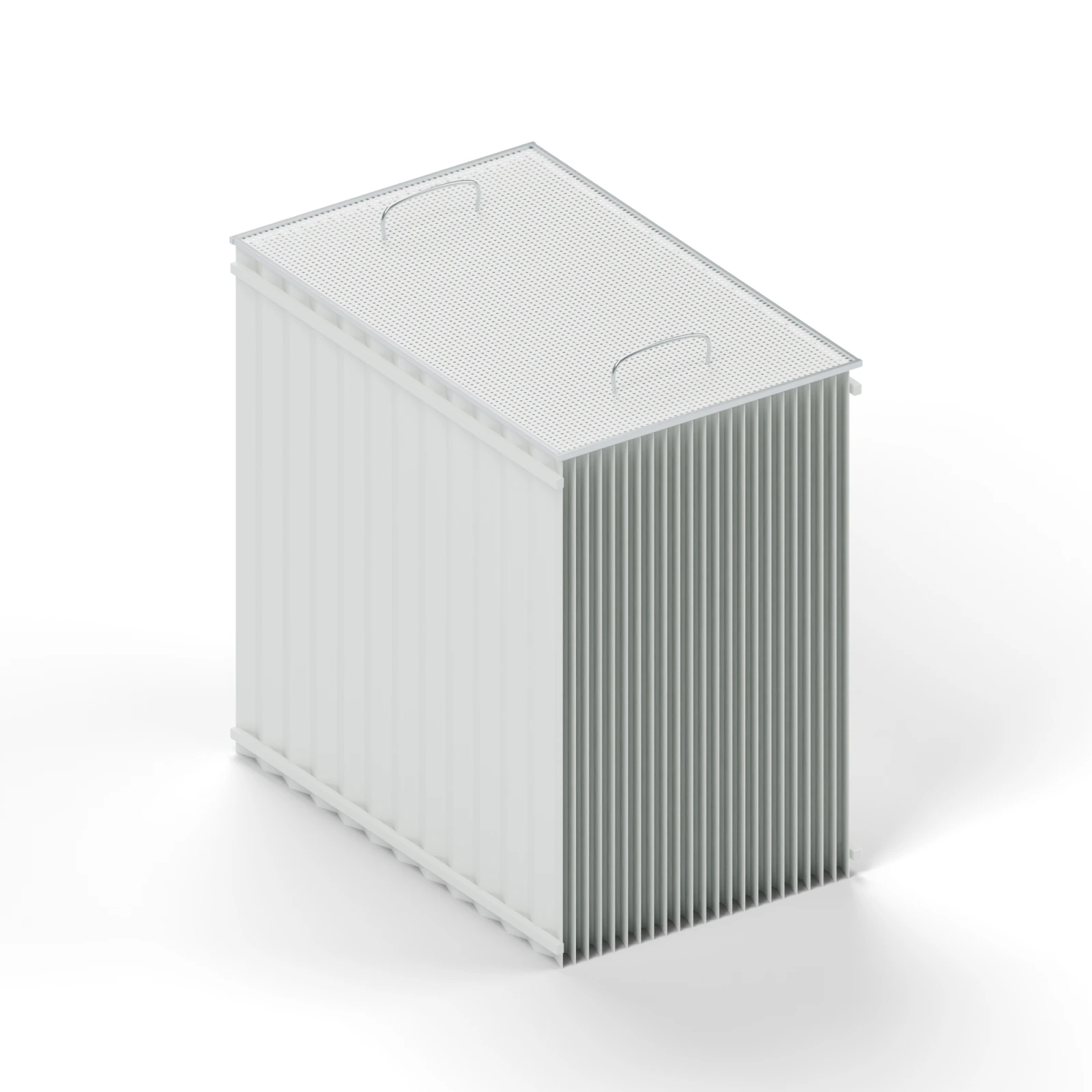
Droplets attract to the polypropylene plates, combine, and rise into an oil layer that overflows to the trough and gravity-drains to your drum.
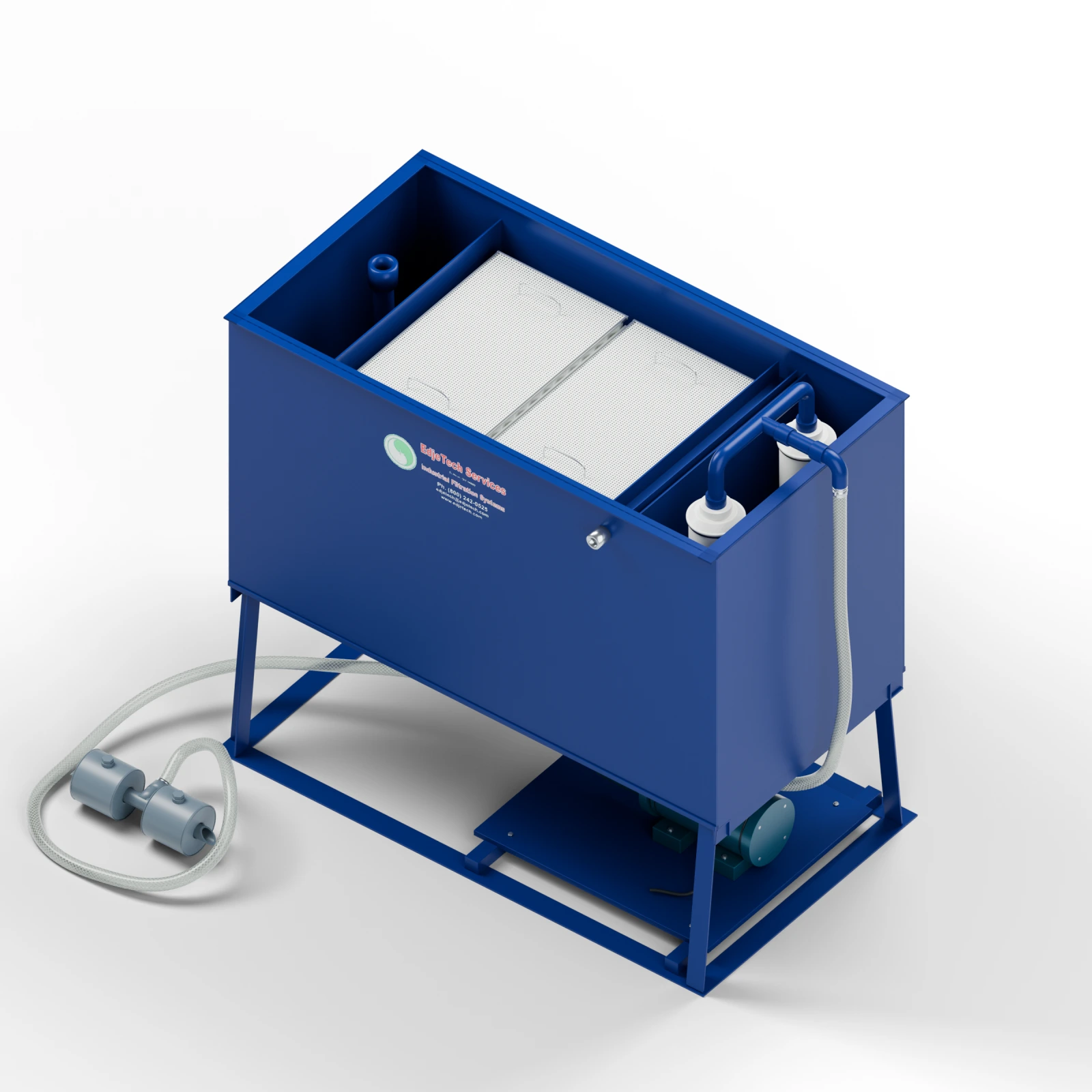
An adjustable weir maintains the oil layer while clarified coolant returns to the reservoir by gravity. Separated oil drains independently without an oil pump.
Component illustrations show representative configurations. Filter arrangements and fittings vary by model.
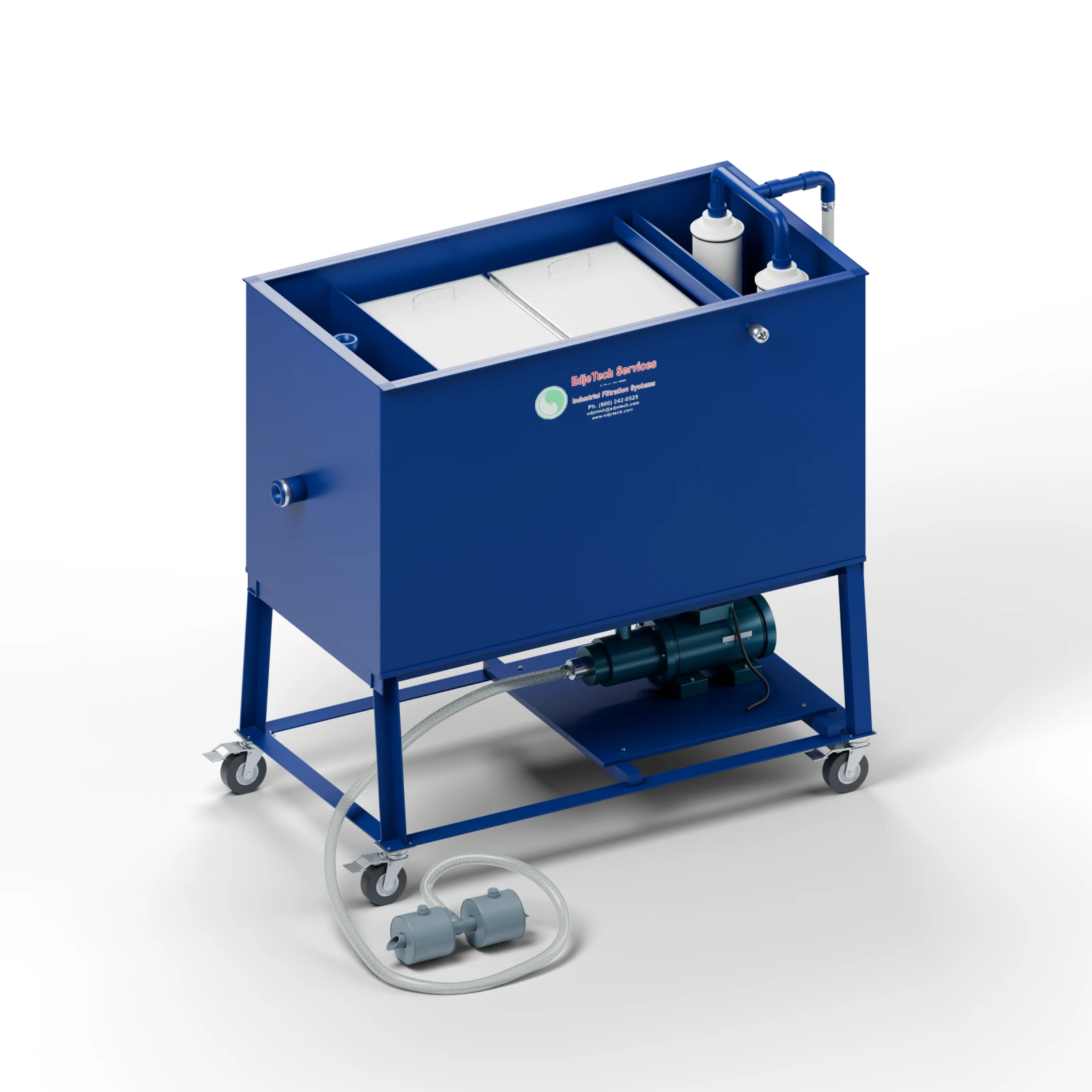
Standard T.O.S.S. models are available with an electric or air-operated supply pump. Casters are an option for equipment that needs to be repositioned.
Air diaphragm or electric progressive-cavity pump, selected for the order.
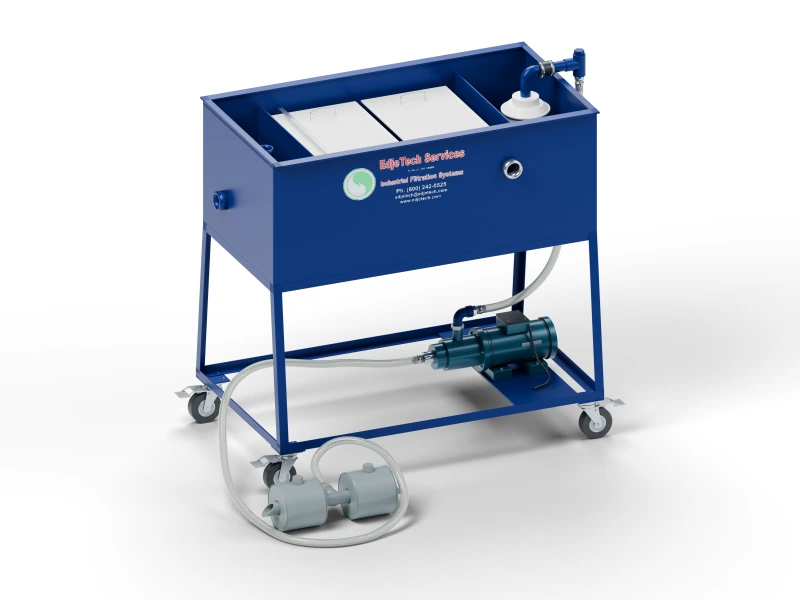
A caster configuration is available within the standard series. The portable T1 remains a separate model.
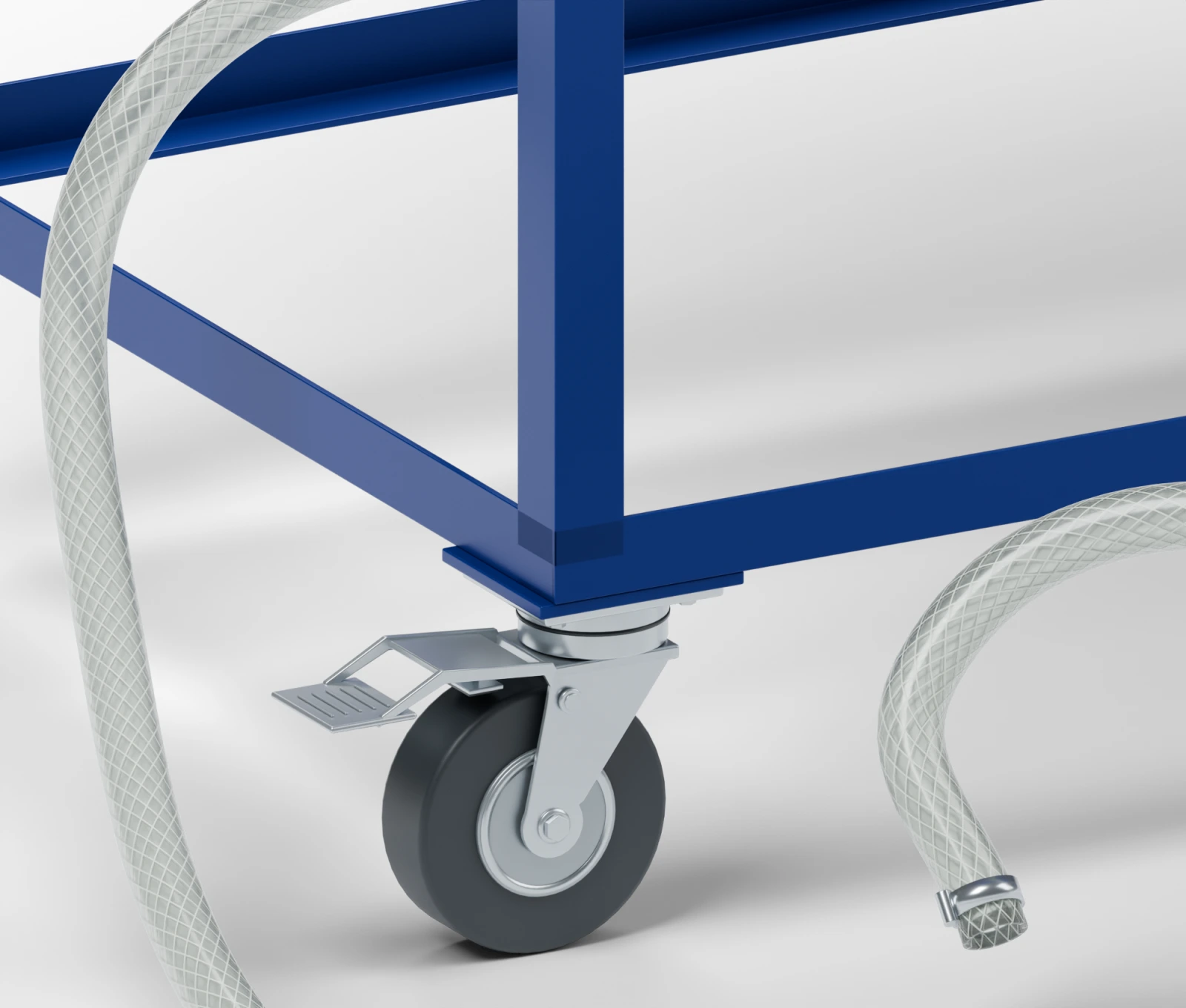
Choose between ballast and vertical floating skimmers to match sump depth, surface access, and changes in fluid level.
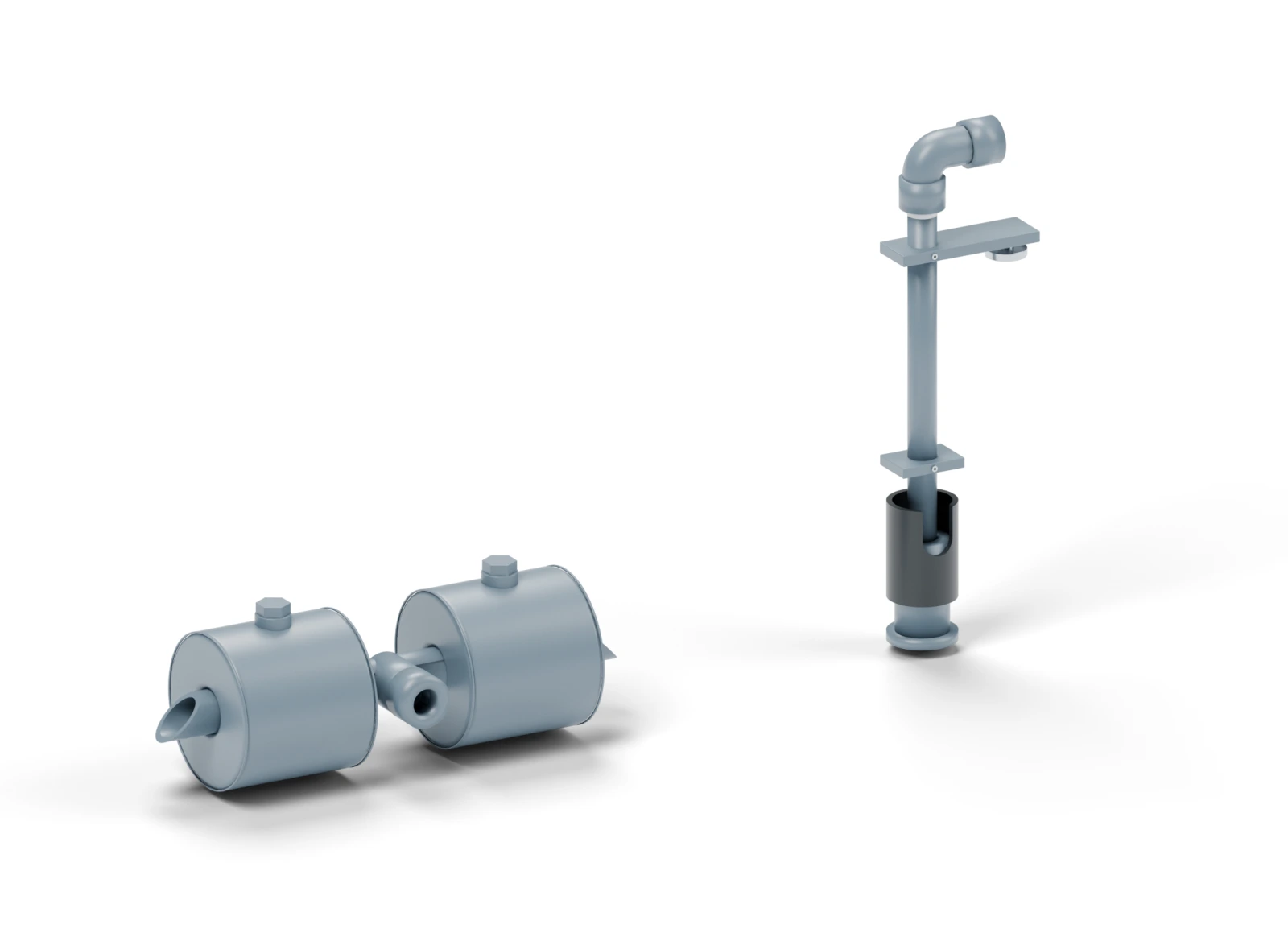
For deep open sumps with large level swings or turbulence, such as central filtration systems and coolant pits. Water-ballasted on site so the suction pipes sit right at the surface.
A stationary float that clamps to the side of the reservoir, skims the surface, and rides the level up and down. Built for shallow, hard-to-reach sumps; the reservoir must not drop below the float's lowest point.
Holding tramp oil below half of one percent helps extend coolant service life. Recovered oil with 1% to 2% water content may be suitable for reclamation or reuse, subject to composition, waste classification, and recipient requirements.
To confirm the fit for your own fluid, talk to an EdjeTech engineer.
A surface skimmer collects floating oil. Coalescing media brings small, separable oil droplets together so they rise for removal. T.O.S.S. combines both functions: its skimmer draws oil-rich fluid from the surface and below it, while the media separates free-floating, mechanically dispersed, and loosely emulsified oil before clarified coolant returns to the reservoir.
The bag filter captures suspended solids before the fluid reaches the coalescing media, which separates the oil. Both stages are included in T.O.S.S.; a solids filter alone does not replace coalescing separation.
Read about filtration and oil separation →T.O.S.S. treats water-based metalworking coolants, synthetics, and alkaline wash water carrying free, dispersed, or loosely emulsified oil. Chemically emulsified oil cannot be removed through coalescing. When separation behavior is unclear, request a fluid-compatibility review.
Talk to an engineer →T.O.S.S. operates autonomously without interrupting the machine. Routine ownership care is limited to condition-based bag-filter service and planned cleaning of accessible separator components. EdjeTech supplies replacement media, parts, and technical support by model.
Yes. An EdjeTech engineer reviews the fluid chemistry, separation behavior, contamination, and operating conditions.
Talk to an engineer →EdjeTech supplies replacement skimmers, coalescing media, bag filters, drawings, operating guidance, and troubleshooting support for installed systems.
Review support resources →Only a progressive-cavity or air-diaphragm pump. Never a centrifugal pump: a centrifugal impeller shears tramp oil into fine droplets and disperses it back through the coolant, undoing the separation.
Remove recurring tramp oil from your reservoirs so usable coolant can stay at work in your machines.