
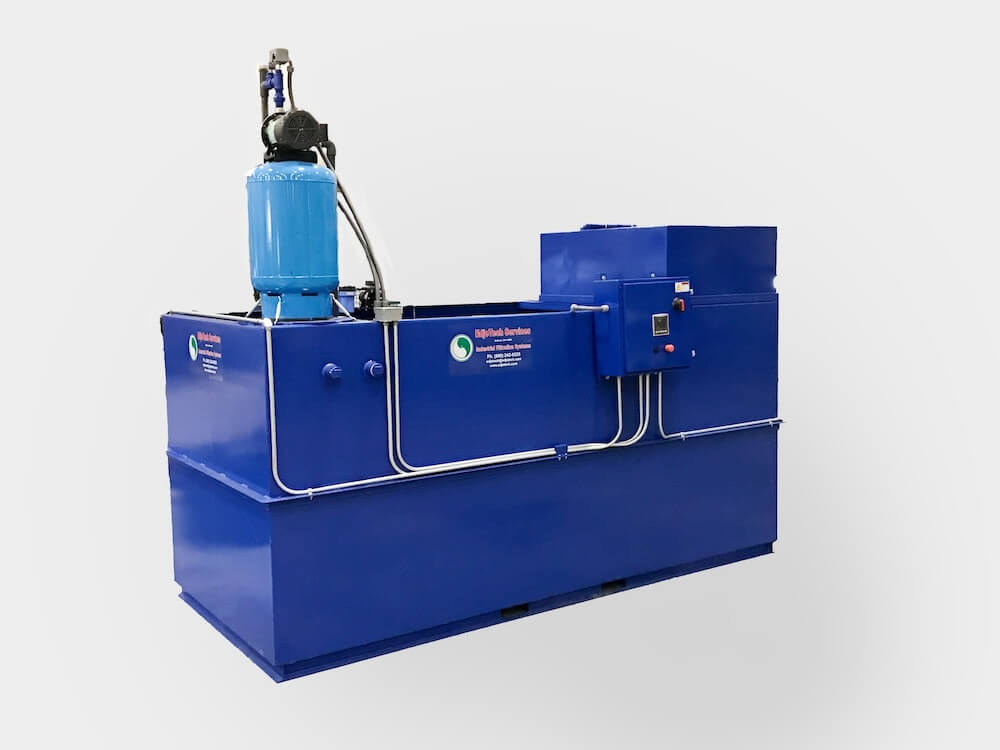
Coolant systems for precision aerospace machining.
Aerospace and defense machining requires consistent coolant quality across expensive materials, tight tolerances, and demanding surface-finish specifications. EdjeTech provides coolant recycling, filtration, separation, and sump-cleaning equipment for these operations.
- 99.75%
- tramp oil & particulate removed by C.R.O.S.S., by volume
- 99% or greater
- C.R.O.S.S. uptime, clean coolant available 24/7/365
- up to85%
- reduction in new fluid purchases with C.R.O.S.S.
- 40+ yrs
- fluid-management engineering experience
Configure equipment for the process and contaminant load
Machine count, coolant volume, required flow, materials, and surface-finish requirements determine the appropriate equipment.
- Operation A
Small & captive shops
≤ 25 GPM · single cell to mid floorCaptive machining departments and small contract shops can use portable coolant transfer where clean-coolant piping is not practical.
Typical fitC.R.O.S.S. or the Green Machine - Operation B
Large primes & tier-1 plants
multi-cell · multi-plantHigh-volume aerospace machining cells and multi-plant operations use C.R.O.S.S. configurations sized to total coolant volume, contaminant load, and required throughput.
Typical fitC.R.O.S.S., configured for the facility - Operation C
Titanium & inconel grinding
fines control · finish + safetyTight-tolerance grinding on titanium and nickel alloys requires media filtration matched to the fine-particulate load, coolant, and surface-finish specification. Additional separation stages depend on the complete material mix.
Typical fitPaper bed + application-specific filtration
Coolant condition affects machining quality and scrap risk
Fines and tramp oil that recirculate through the work zone can affect surface finish, tool life, and coolant performance. Removing these contaminants supports process consistency while reducing coolant replacement and disposal.
- Surface finish & part quality
- Supports consistency
- Tool life
- Supports longer service
- Coolant life
- Supports extension
- C.R.O.S.S. waste-disposal cost
- Up to 90% less
- C.R.O.S.S. new-fluid purchases
- Up to 85% less
- Clean coolant availability
- 99% or greater uptime
Reduce waste volume and improve coolant housekeeping
Coolant recycling reduces disposal volume and supports cleaner fluid-management practices across the facility.
- Coolant waste
Lower disposal volume
C.R.O.S.S. can reduce waste-disposal costs by up to 90%, lowering the volume of spent coolant that requires off-site management.
- Exposure & housekeeping
Bacteria and odor control
Removing free oil and suspended contaminants reduces the material that supports bacterial growth. Optional ozone provides automated bacteria and odor control without routine biocide addition.
- Titanium-specific
Class D fire hazard
Titanium fines require material-specific collection and handling because accumulated combustible-metal fines can present a Class D fire hazard. Review filtration media, collection, and disposal procedures with the facility's EHS team.
Review coolant-waste reduction and the product information available for facility records. See sustainability information →
Coolant management for aerospace operations
Select equipment by fluid type, contaminant, required flow, and maintenance requirement.
| Equipment | Application | More information |
|---|---|---|
| C.R.O.S.S.2–25 GPM | Central coolant recycling for aerospace machine shops, configured for portable, piped clean-coolant, or hybrid transfer. | View → |
| Green Machine55–70 GPM | Portable sump cleaning; the dual-tank version empties and refills in one pass. Filter bags 50 to 200 micron. | View → |
| T.O.S.S.2–50 GPM | Autonomous tramp-oil control for individual sumps, reservoirs, pits, and parts washers. | View → |
| Paper bed + magneticFines | The fines equipment for grinding-heavy aerospace work, run alone or paired. | View → |
| S.O.F.Oil-side | Filtration for straight and neat oils across 16 supported fluid types, configured by application. | View → |
Reduce contamination, coolant consumption, and disposal
Apply product-specific performance to the coolant conditions and operating requirements of the facility.
- 99.75%
- Tramp oil and particulate removed by volume.
- 99% or greater
- System uptime, with clean coolant available 24/7/365.
- 40+ yrs
- Engineering and servicing coolant recycling systems on plant floors.
- up to 85%
- Reduction in new fluid purchases on a recycling system.
Aerospace system selection depends on coolant type, processed materials, contaminant load, required flow, machine layout, and finish requirements. EdjeTech engineers review these operating requirements and recommend the appropriate system configuration.
Aerospace coolant-management considerations
- 01
What filtration does titanium grinding need?
Paper-bed media captures titanium and other non-ferrous alloy fines at a rating selected for the coolant, wheel, and surface-finish specification. Magnetic separation applies only when the process also produces ferrous material. Add coolant recycling when tramp oil, concentration, consumption, and disposal also require control.
Grinding coolant filtration → - 02
Why does titanium need reliable fines removal beyond part quality?
Fine titanium particles can present combustible-metal fire or explosion hazards depending on particle size, form, concentration, and operating conditions. Filtration and collection methods should be reviewed with the facility's EHS and fire-protection teams. The facility must determine the waste classification and disposal requirements for collected fines and loaded filter media.
- 03
What size system fits a small captive aerospace shop?
C.R.O.S.S. models process approximately 2 to 25 GPM and can use portable dirty-coolant transfer where central piping is not practical. Final sizing follows coolant volume and required throughput.
See C.R.O.S.S. → - 04
Can EdjeTech review the application before quotation?
Yes. EdjeTech can review the fluid, materials, contaminants, required flow, finish specifications, and facility layout before recommending equipment.
Talk to an engineer →
Support the finish your precision parts require
Control coolant contamination to support the tool life and surface finish your precision machining demands.
- Equipment guidance
Talk to an engineer
Match filtration to your machining fines and working coolant.
Talk to an engineer → - Technical requirements
Discuss your project
Resolve flow, filtration, and installation questions for your machining cell.
Talk to an engineer → - Savings and payback
Savings calculator
Estimate potential coolant and disposal savings.
Estimate potential savings → - Product specifications
C.R.O.S.S.
Review models, throughput, configurations, and options.
View C.R.O.S.S. →