
 35–40 PSI · clean-coolant pipingwheeled · portable transferone clean tank · shared coolant program
Hybrid coolant recycling
for mixed facility layouts.
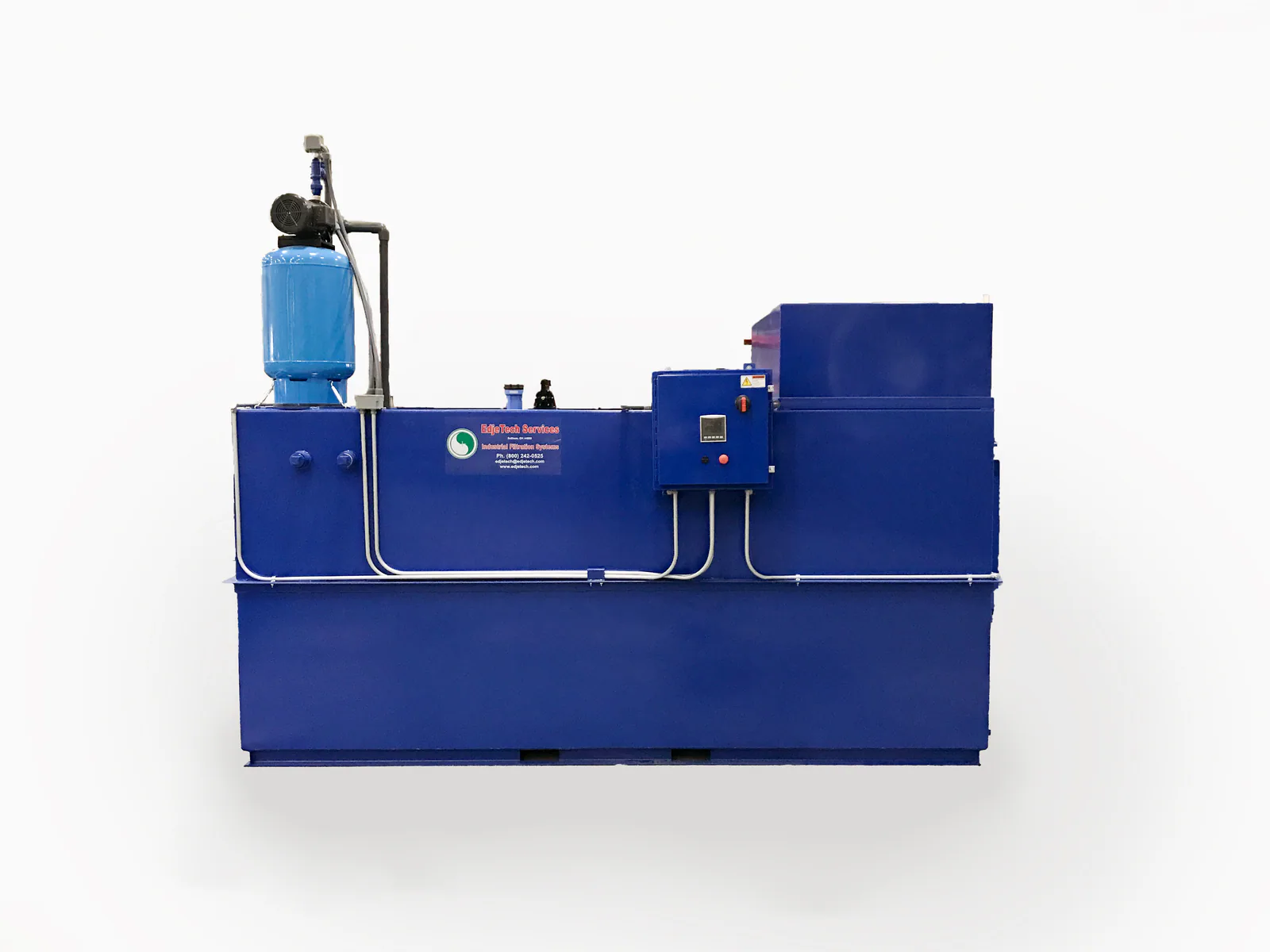
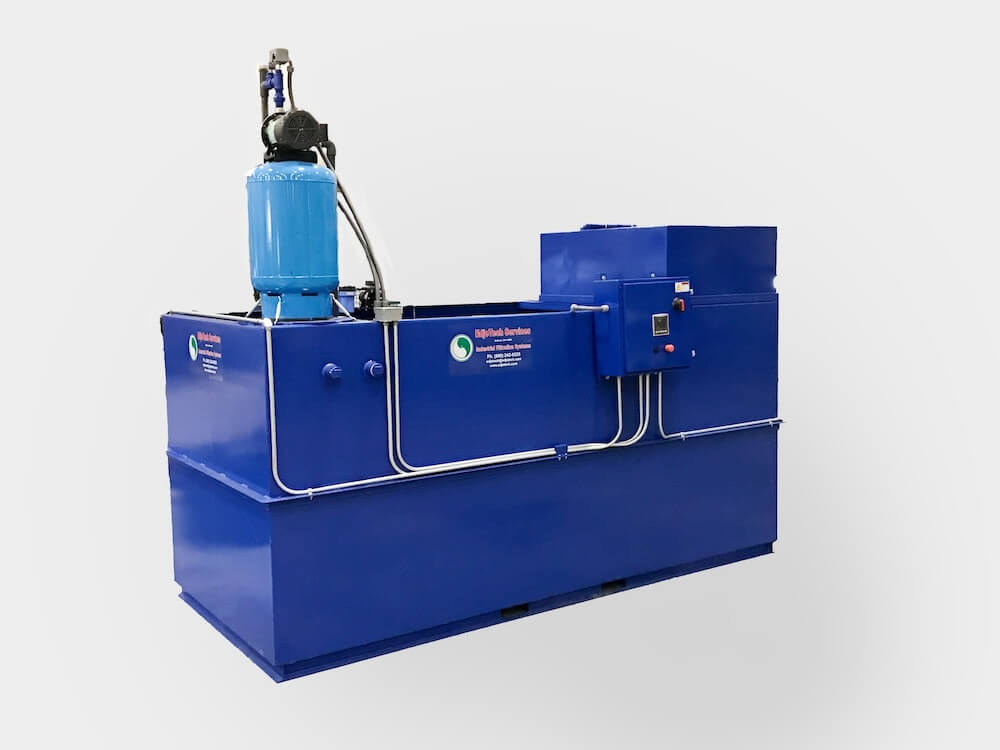
One C.R.O.S.S. supplies clean coolant through facility piping to concentrated machine areas and through portable transfer equipment to isolated machines. Both delivery methods use the same recycling system and clean-coolant supply for machines operating with a compatible coolant program.
- 1 system
- supports piped and portable delivery
- 99.75%
- tramp oil & particulate removed, by volume
- up to85%
- reduction in new fluid purchases
- 24/7/365
- clean coolant available at 99% or greater uptime
Combine piped distribution with portable transfer
Facility layouts often combine concentrated machine areas with isolated equipment. A hybrid configuration uses the optional CRS to distribute clean coolant where piping is practical and portable equipment for isolated machines within the compatible coolant program.
- One system supports both configurationsThe optional Coolant Return System supplies the piped cells, while the same C.R.O.S.S. clean tank supplies portable transfer equipment.
- Consistent coolant concentrationThe proportioner mixes concentrate and water at the required concentration for the compatible fluid program served by both delivery methods.
- Portable dirty-coolant collectionA Green Machine or another compatible transfer device collects dirty coolant from machine reservoirs and delivers it to C.R.O.S.S.
When hybrid coolant transfer fits
Hybrid systems are appropriate when clean-coolant piping is practical for part of the facility but portable transfer is more efficient for isolated machines or secondary areas. Pipe length, delivery points, machine density, sump volume, and operating schedule determine which areas receive clean-coolant piping and which use portable transfer.
- 01A dense main cell where short runs serve many machines
- 02Isolated machines where a pipe run would serve only one or two delivery points
- 03Piped and portable areas use a compatible coolant family and target concentration
- 04A phased distribution plan for selected machine cellsPortable transfer can serve the remaining equipment.
- 05A dense layout allows clean-coolant piping to serve every required delivery pointCentral deployment →
- 06Facility layout or lease conditions make clean-coolant piping impracticalBatch deployment →
Define the clean-coolant distribution area
Evaluate machine density, required delivery points, pipe length, sump volume, and service frequency to establish the piped and portable sections of the facility.
Recycling role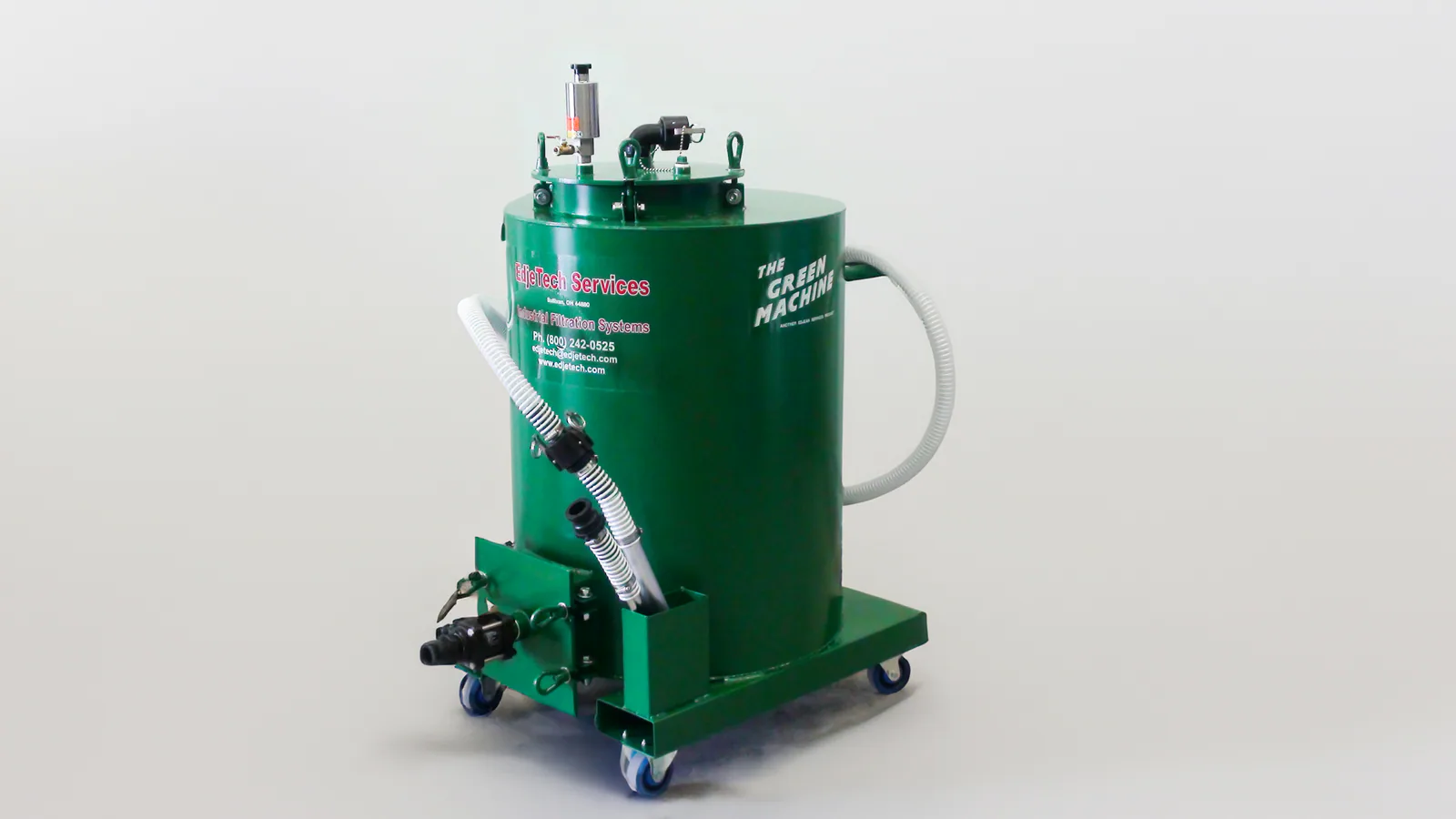 Portable transfer role
Clean-coolant piping serves multiple delivery points
The optional Coolant Return System supplies clean coolant at 35 to 40 PSI. Multiple delivery points can be connected to a shared facility piping run.
Portable transfer serves machines outside the piped area
Isolated grinders, lathes, or secondary departments receive clean coolant from a transfer unit rather than a dedicated pipe run. They use the same recycled coolant supplied by C.R.O.S.S.
Run length, machines served, required delivery points, and sump volume determine the boundary.
One recycling system supports both delivery methods
C.R.O.S.S. processes and stores clean coolant for both delivery methods. The optional CRS supplies the piped area, and portable equipment serves isolated machines.
CRS LOOP OPTIONC.R.O.S.S.C.R.O.S.S. processes and supplies the coolant
C.R.O.S.S. is sized for the total compatible coolant volume and required processing rate. The Coolant Return System supplies the piped area through coolant delivery points, while the same clean tank fills the transfer unit for isolated machines.
- Piped distribution
- 35–40 PSI clean-coolant supply with delivery points in the selected machine areas
- Portable supply
- The same clean tank fills the transfer unit for isolated machines
- Separation
- 99.75% of tramp oil and particulate removed by volume, regardless of delivery method
- Throughput
- 120–1,500 GPH across six models, sized to total weekly coolant volume
COLLECT + RETURNGreen MachineGreen Machine serves the portable route
The Green Machine collects dirty coolant from machine reservoirs across the facility. For isolated machines, the DTS configuration can also carry clean coolant for return during the same sump visit.
- Vacuum rate
- 55–70 GPM, air-powered on 19 CFM of shop air, no electric motor
- Portable role
- Dirty-coolant collection throughout the facility and clean-coolant delivery to isolated machines
- Substitution
- Other compatible transfer equipment may be used following an application review
Both clean-coolant delivery methods use the same C.R.O.S.S. Facility piping serves the selected cells, while portable equipment serves the remaining machines.
Confirm the configuration with an engineer →Extend recycling across mixed facility layouts
Both delivery methods are supplied by the same C.R.O.S.S., providing 99.75% tramp oil and particulate removal by volume, up to 85% lower new-fluid purchases, and up to 90% lower disposal costs.
- Facility piping
- Selected machine areas
- The CRS serves areas with multiple delivery points, while portable transfer serves isolated machines.
- Coolant consistency
- Mixed to the required concentration
- Piped and portable areas draw from the same clean tank and compatible coolant program.
- Centralized recovery
- One recycling process
- Coolant from both delivery areas is processed through the same filtration and separation system.
- Expansion
- A phased distribution plan
- Portable transfer can serve the facility while clean-coolant piping is planned for selected cells.
Plan the piped and portable sections
- Portable section
- Transfer equipment and accessPlan the sump-service route around machine access, coolant volume, and collection frequency.
- Piped section
- Clean supply runs & delivery pointsThe optional CRS supplies clean coolant at 35 to 40 PSI through facility piping.
- Transfer schedule
- Sized to sump volumePortable sump service frequency follows coolant volume and operating conditions.
Planning a hybrid recycling system
- 01
Do piped and portable delivery require separate recycling systems?
No. One C.R.O.S.S. can support both methods. Size the system to the facility's total coolant volume and required processing rate.
See C.R.O.S.S. → - 02
Which areas should receive clean-coolant piping?
Evaluate pipe length, number of delivery points, machine density, sump volumes, and service frequency. An engineer can review the proposed distribution area.
Estimate potential savings → - 03
Can portable transfer be used before clean-coolant piping is added?
Yes. A batch configuration can support initial operation, and the optional Coolant Return System can be specified for clean-coolant distribution. Retrofitting an installed unit requires a configuration review.
Batch configuration →
Make recycling fit your mixed shop layout
Recover used coolant with collection and clean-fluid delivery that work around your existing machine layout.
- Estimate operating value
Savings calculator
Estimate potential facility-wide coolant and disposal savings.
Calculate potential savings → - Equipment guidance
Talk to an engineer
Decide where piping fits and where portable collection works better.
Talk to an engineer → - Select coolant equipment
C.R.O.S.S. or T.O.S.S.
Compare facility-level recovery with fixed and portable reservoir treatment.
Compare equipment → - System quotation
Request a quote
Reduce coolant waste across machines with different service needs.
Request a quote →